


Galvanized wastewater treatment equipment
Category
零售价
市场价
重量
库存
隐藏域元素占位
- Overview
-
- Commodity name: Galvanized wastewater treatment equipment
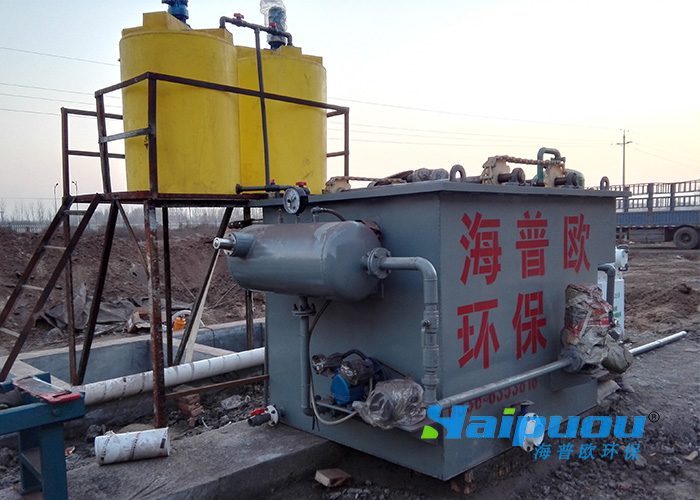
According to our factory’s years of engineering experience, the direct pressure filtration method can be used for one-step treatment of such high-concentration wastewater. This not only reduces the investment in sedimentation tanks but also ensures that wastewater of different concentrations is treated to stably meet the standards. When the sludge content in the influent is low, the water output of pressure filtration is still large. This method has been applied in a number of wastewater treatment projects, and after more than two years of operation, user feedback has been positive. The adoption of direct pressure filtration can save investment by more than 10% and reduce the floor area by 20%.
The Electroplating Industry and Zinc Plating Wastewater Treatment Process
The electroplating industry is an indispensable sector in the national economy, involving the national defense, industrial, and daily life fields. It is broadly classified into metal part electroplating and plastic electroplating, which achieve effects such as workpiece corrosion resistance, aesthetic enhancement, service life extension, and surface decoration.
Zinc Plating Wastewater Treatment Process
The design of a wastewater treatment process is determined through comprehensive technical and economic comparisons based on the nature and composition of the wastewater, the enterprise’s specific conditions, and the requirements for effluent quality parameters after treatment.
There are many electroplating wastewater treatment processes: resin exchange was popular in the 1970s, while electrolysis, chemical method + air flotation, etc., were widely used in the 1980s. Based on our factory’s 20 years of practice in electroplating wastewater treatment, resin exchange has unique advantages in treating wastewater containing precious and rare metal ions and recovering such metals.
-
Electrolysis Method: It has high energy consumption, with both high electricity and iron consumption. For high-concentration chromium-containing wastewater, it generates excessive sludge, making it unsuitable. Meanwhile, its effect on cyanide-containing wastewater treatment is not ideal, so the chemical method is still required for cyanide-containing wastewater.
-
Chemical Agent + Air Flotation Method: This method uses chemical agents for redox neutralization and air flotation to separate sludge and water. However, due to the high specific gravity of electroplating sludge and the presence of various organic additives in the wastewater, air flotation separation is incomplete in practical use, and operation and management are inconvenient. By the end of the 1990s, the application of the air flotation method became increasingly rare.
-
Chemical Agent + Precipitation Method: This is the earliest applied method. After more than 30 years of practical comparisons among different treatment processes, it has now returned to this earliest yet most effective treatment process. This method is also widely used in electroplating treatment abroad. However, after long-term operation of solid-liquid separation, sludge in the sedimentation tank will turn up, making it difficult to ensure that the effluent stably meets the standards.
Biological Treatment Process Developed in Recent Years
This process achieves high operation efficiency for small-volume wastewater with a single plating type, but it is very unstable when used in many large-scale projects. Due to the difficulty in maintaining stable water quality and quantity, microorganisms struggle to adapt stably to changes in water temperature, plating types, heavy metal ion concentrations, and pH values. This can lead to the sudden mass death of microorganisms, resulting in environmental pollution accidents, and it is also not easy to culture the bacteria.
Our process targets different types of wastewater by adding different chemicals for redox neutralization, followed by direct pressure filtration for sludge separation. It features low investment, convenient operation and management, stability and reliability, and low energy consumption.
Currently, many water-scarce areas require the recycling and reuse of electroplating wastewater. On the basis of the pre-treated water quality meeting the first-level discharge standards in GB8978-1996, advanced purification is needed. The main issue with recycled water is its high salt content, accounting for 20%-23%, so desalination treatment is essential. The process of "coarse filtration → fine filtration → ultrafiltration → reverse osmosis" can make the water meet the drinking water quality standards, which is of certain significance for water resource reuse. However, concentrated liquids containing pollutants such as chromium salts, accounting for 20%-23%, are still discharged into the environment.
Five years ago, our factory achieved the high-standard electroplating wastewater treatment requirements of Qianjiang Group (requiring heavy metal content < 0.05 mg/L, 10 times better than the national discharge standard) using the chemical agent + precipitation, filtration, and ion exchange method. From the perspective of current process levels, reverse osmosis is more suitable for this purpose.
Based on our unit’s years of practical experience in wastewater treatment projects, under the condition that an appropriate amount of chemicals is added and the reaction proceeds well, both the air flotation method and the precipitation method only play the role of solid-liquid separation. However, neither method can meet the requirements of thorough, stable, and reliable solid-liquid separation, nor can they achieve timely and effective separation when treating high-concentration wastewater. This conclusion has been verified in our previous projects. For example, the wastewater discharged by 85 small electroplating factories in the Longwan Electroplating Base of Wenzhou is centrally neutralized, and the suspended solids account for about 50% of the total volume. When the sedimentation tank is used for separation, the effluent is clear in the first hour, but sludge turns up in the second hour, making the effluent fail to meet the standards. To ensure continuous clear effluent, continuous sludge discharge is required, with the sludge discharge volume accounting for 50% of the influent volume. This results in a large amount of sludge that needs further dewatering treatment.
According to our factory’s years of engineering experience, the direct pressure filtration method can be used for one-step treatment of such high-concentration wastewater. This not only reduces the investment in sedimentation tanks but also ensures that wastewater of different concentrations is treated to stably meet the standards. When the sludge content in the influent is low, the water output of pressure filtration is still large. This method has been applied in a number of wastewater treatment projects, and after more than two years of operation, user feedback has been positive. The adoption of direct pressure filtration can save investment by more than 10% and reduce the floor area by 20%.
Keywords:
Messages

Contact: +86 18016210178 (Ms.Liu)
Add:No.56, Donghuan Road, Zhucheng City, Weifang City, Shandong Province