


MVR crystallizer evaporator
Category
零售价
市场价
重量
库存
隐藏域元素占位
- Overview
-
- Commodity name: MVR crystallizer evaporator
The industrial application of MVR (Mechanical Vapor Recompression) crystallization evaporator technology in the thenardite industry can effectively solve the problems existing in current thenardite enterprises—high evaporation costs and large water consumption during thenardite production—which lead to high production costs for the enterprises.
MVR Crystallization Evaporator
The MVR (Mechanical Vapor Recompression) crystallization evaporator is a product specifically designed for crystallization conditions, with its design focused on meeting such conditions. This article will discuss the characteristics and application fields of the MVR crystallization evaporator with you.
1. Characteristics of the MVR Crystallization Evaporator
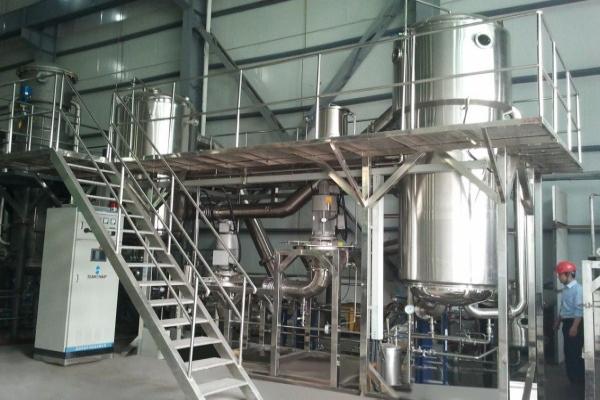
- The MVR crystallization evaporator has effective anti-clogging performance and strong anti-scaling ability.
- The design of the MVR crystallization evaporator takes energy conservation as its main feature and uses solution evaporation and crystallization as its primary purpose. It is widely used in the evaporation and crystallization of aqueous solutions in industries such as chemical engineering, hydrometallurgy, and pharmaceuticals, as well as in the zero-discharge treatment of salt-containing wastewater through evaporation.
2. Energy Efficiency of the MVR Crystallization Evaporator
Compared with multi-effect evaporators, the MVR crystallizer has significant energy-saving effects in evaporation.
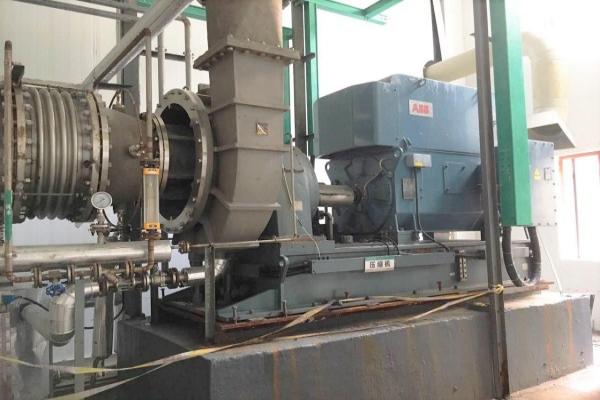
The MVR evaporation crystallizer recovers the evaporated vapor (secondary vapor). Specifically, by inputting a small amount of mechanical energy through a compressor, the thermal grade of the vapor can be improved; the vapor that would otherwise be discarded is recovered and pressurized, enabling it to be reused as a heat source. The recovered vapor is sent back to the heater to serve as the main heat source for the evaporation and crystallization system. Since the MVR evaporator has almost no waste heat discharge, its energy-saving effect is extremely prominent.
The MVR crystallization evaporator is mainly used in the preparation of thenardite (sodium sulfate anhydrous). Its technical feature is that nitrate enters the crystallization evaporator for concentration at low temperatures. The secondary vapor in the evaporation chamber is compressed by a compressor, resulting in increased pressure and temperature as well as enhanced heat recovery. The compressed vapor is then sent to the heating chamber to act as heating steam, keeping the liquid material boiling, while the heating steam itself condenses into water.
In this way, waste vapor is fully utilized, latent heat is recovered, and thermal efficiency is improved.
The crystallization evaporator can make full use of the latent heat of secondary vapor, operate at low temperatures, and achieve energy conservation. It is easy to operate, produces no waste residue, waste gas, or wastewater, and causes no pollution to the environment.
3. Application Fields of the MVR Crystallization Evaporator
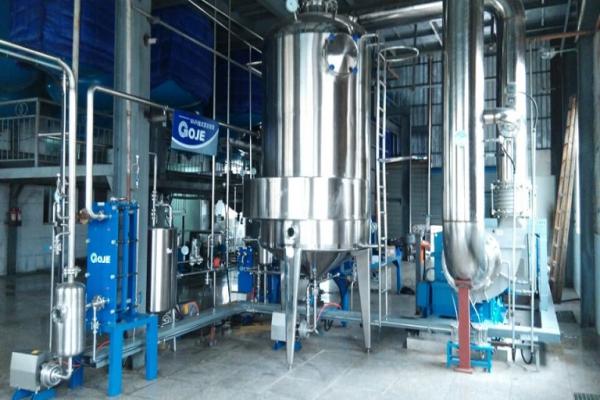
The MVR crystallization evaporator is particularly suitable for the evaporation and desalination of salt-containing wastewater containing sodium chloride, sodium sulfate, ammonium sulfate, potassium sulfate, potassium chloride, etc.
For the evaporative crystallizer, a forced circulation evaporator (FC) is used. The heater and separator have distinct functional divisions: the material is only heated in the heater (not in the evaporator) and only boils in the separator (without being heated there).
4. Application of the MVR Crystallization Evaporator in the Thenardite Industry
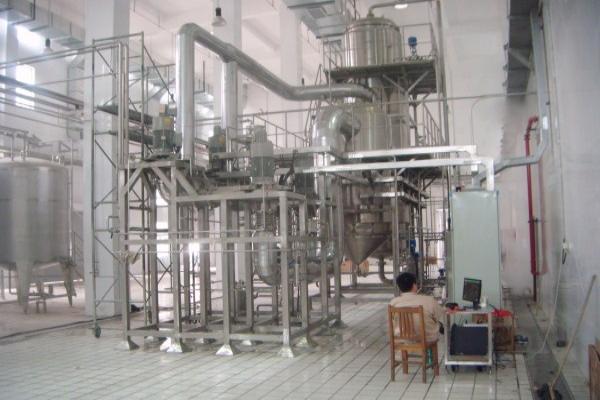
The industrial application of MVR (Mechanical Vapor Recompression) crystallization evaporator technology in the thenardite industry can effectively solve the problems existing in current thenardite enterprises—high evaporation costs and large water consumption during thenardite production—which lead to high production costs for the enterprises.
Keywords:
Messages

Contact: +86 18016210178 (Ms.Liu)
Add:No.56, Donghuan Road, Zhucheng City, Weifang City, Shandong Province