


Wastewater treatment equipment for nucleic acid testing laboratories
Category
零售价
市场价
重量
库存
隐藏域元素占位
- Overview
-
- Commodity name: Wastewater treatment equipment for nucleic acid testing laboratories
The integrated laboratory wastewater treatment equipment comprehensively treats organic, inorganic, and biological wastewater generated in laboratories through a series of units and technologies, including a wastewater collection unit, automatic adjustment unit, coagulation-air flotation automatic stirring unit, flocculation-coagulation sedimentation reaction unit, sedimentation separation unit, multi-stage advanced oxidation treatment unit, multi-stage decomposition and degradation treatment unit, high-low potential difference micro-electrolysis technology, electrochemical redox, two-stage organic biological activity treatment technology, and new biochemical reaction treatment technology. It can effectively remove COD, BOD, SS, chroma, heavy metal ions, and other pollutants from wastewater. For the components of different laboratory wastewaters, different treatment technologies and control systems are adopted for wastewater treatment. The equipment is operated through an operating system, and its operation follows the procedures set by the controller and the parameters set by the PH/ORP meters.
I. Introduction to Laboratory Wastewater Treatment Equipment
The integrated laboratory wastewater treatment equipment comprehensively treats organic, inorganic, and biological wastewater generated in laboratories through a series of units and technologies, including a wastewater collection unit, automatic adjustment unit, coagulation-air flotation automatic stirring unit, flocculation-coagulation sedimentation reaction unit, sedimentation separation unit, multi-stage advanced oxidation treatment unit, multi-stage decomposition and degradation treatment unit, high-low potential difference micro-electrolysis technology, electrochemical redox, two-stage organic biological activity treatment technology, and new biochemical reaction treatment technology. It can effectively remove COD, BOD, SS, chroma, heavy metal ions, and other pollutants from wastewater. For the components of different laboratory wastewaters, different treatment technologies and control systems are adopted for wastewater treatment. The equipment is operated through an operating system, and its operation follows the procedures set by the controller and the parameters set by the PH/ORP meters.
II. Application Scope of Laboratory Wastewater Treatment Equipment
The integrated laboratory wastewater treatment equipment is a specialized device for integrated laboratory wastewater treatment in various industries at home and abroad. It features high automation, good treatment effect, small floor space, simple operation and management, and no need for dedicated personnel on duty, thus winning high praise from users. It is widely used in laboratories and testing rooms of colleges and universities, research institutes, food and drug inspection institutions, product quality inspection institutes, centers for disease control and prevention (CDC), environmental monitoring stations, agricultural product quality inspection institutions, inspection and quarantine departments, grain and oil testing centers, animal disease control centers, blood stations, animal husbandry and veterinary institutions, medical institutions, hospitals, biopharmaceutical companies, petrochemical enterprises, and other enterprises. After treatment, the wastewater meets the first, second, and third-level standards specified in the Integrated Wastewater Discharge Standard [GB8978-1996]. The treated wastewater can be discharged into municipal sewage pipelines, surface water, or rivers, and can also be reused through re-treatment processes.

III. Functional Features of Laboratory Wastewater Treatment Equipment
- Wide applicability: Suitable for the treatment of integrated waste liquids in various laboratories.
- Adoption of multiple advanced technologies: Conducts multi-stage treatment and purification of wastewater to meet discharge standards.
- Centralized control: Features high automation, simple operation, and fully automatic operation without the need for dedicated personnel on duty.
- Multiple protection functions: Equipped with automatic water leakage and electric leakage protection, automatic high and low voltage protection, no-wastewater protection, and liquid storage tank level protection.
- Modular integrated technology: Ensures good treatment effect, no secondary pollution such as waste residue or wastewater, and low operating cost.
- Corrosion resistance (acid and alkali resistant): Low noise, low power consumption, and multiple safety protection features.
- "One-stop" integrated design: Attractive appearance, small floor space, fast treatment speed, low investment, convenient installation and movement, large treatment capacity, good treatment effect, low energy consumption, no noise, no leakage, and environmental friendliness, truly realizing the integration of engineering and equipment. There is no need to dig multiple treatment pools, and no secondary pollution such as waste residue, waste gas, or wastewater will be generated.
IV. Process Flow Diagram of Laboratory Wastewater Treatment Equipment
Regulation Tank → PH Adjustment Tank → Micro-Electrolysis Tank → Sedimentation Tank → Clear Water Tank → Secondary Adsorption Filtration → Disinfection → Discharge up to Standard
Equipment Process:Wastewater is collected through sewage pipes and enters an external storage barrel for storage, regulation, and uniform water quality, with large-particle impurities initially precipitated. The internal float switch senses the water level; when the set high water level is reached, the wastewater is transported to the main body of the equipment by an external lift pump. First, it enters the PH adjustment tank, where the PH value is automatically adjusted under the control of a PH detector (parameters are preset at the factory and can be adjusted according to actual conditions) – adding alkali if the water is acidic and adding acid if it is alkaline. After PH adjustment, the wastewater flows into the micro-electrolysis tank by gravity, where electrolysis is carried out through the internal potential difference to reduce COD and remove some heavy metal ions. Then, it enters the flocculation sedimentation tank in sequence, where PAC (Poly Aluminum Chloride) or PAM (Polyacrylamide) is added for flocculation and sedimentation to reduce SS. When the wastewater flows into the clear water tank and reaches a certain water level, a self-priming pump automatically transports it to a multi-media filter for adsorption and filtration, and then it enters a slow-release disinfection device for disinfection treatment. After the above treatment, the wastewater meets the first, second, and third-level standards in the Integrated Wastewater Discharge Standard [GB8978-1996]. The treated wastewater can be discharged into municipal sewage pipelines, surface water, or rivers, and can also be reused through re-treatment processes.
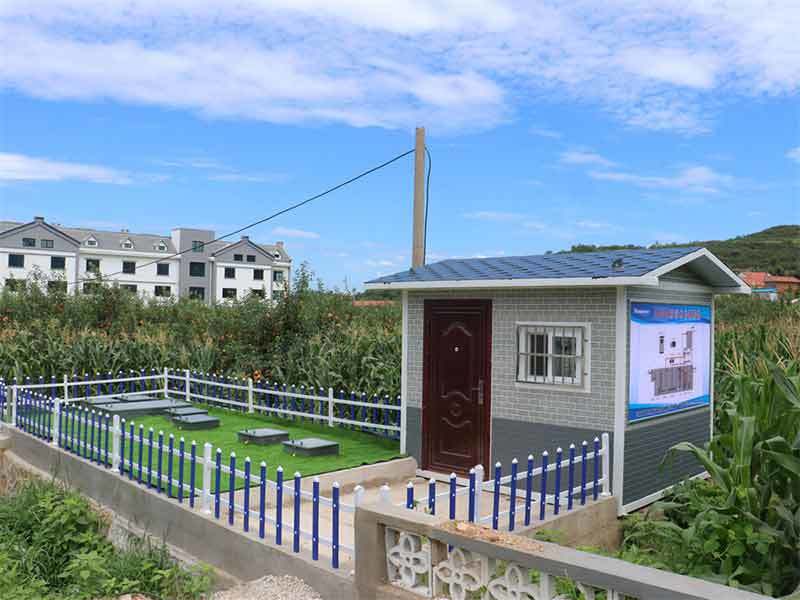
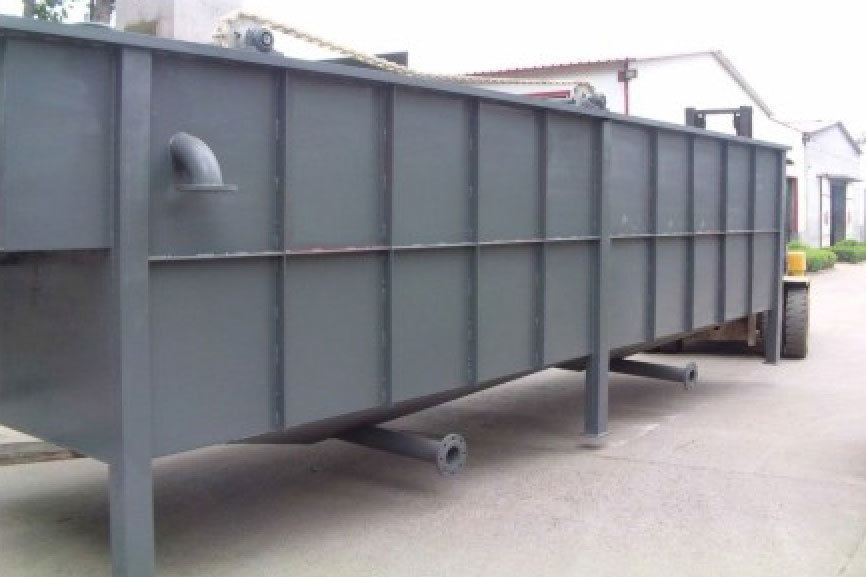
V. Reference Diagram of Laboratory Wastewater Treatment Equipment
VI. Usage Scope of Laboratory Wastewater Treatment Equipment
Laboratory wastewater treatment devices are customized according to actual on-site conditions.
VII. After-Sales Service Commitment
Our company adheres to the tenet of "Credit First, Customer Supreme" and strives to provide high-quality after-sales services:
-
Warranty Period: 12 months from the acceptance and commissioning of the main equipment; 12 months from the acceptance and commissioning of auxiliary equipment. Free maintenance is provided within the warranty period, and lifelong maintenance is offered. After the warranty period, only the cost of components is charged, with no service fee.
-
After the warranty period, our company will continue to provide the owner with original-priced spare parts and 易损 parts (wear parts) at material cost only, and quickly provide the technical services required by the owner. We commit that for major equipment, replacement parts of the same level or no less than the original level can be provided within 8 years, and they can meet the application requirements of the original system.
-
Our company’s after-sales service hotline is 400-863-7369, which is available at any time to receive customer requests for help and provide technical support. In case of equipment failure, we will respond within one hour after receiving the customer’s call. If on-site maintenance personnel are needed, we will send personnel to the site within 24 hours (paid service).
-
For senior maintenance personnel, we will explain the control principle of the disinfection system in detail, help them familiarize themselves with the equipment performance, parameters, and hardware configuration for operation, installation, and maintenance, and enable them to conduct daily maintenance and regular calibration of the system.
-
For operation, installation, and maintenance personnel, in addition to introducing the control principle of the disinfection system in detail, we will also explain the equipment maintenance manual and on-site operation essentials, enabling them to be familiar with the system, operate it correctly, modify parameters within their authority reasonably and accurately with the help of the automatic control system, and ensure the normal operation of the equipment and the quality of the effluent water.
Keywords:
Messages

Contact: +86 18016210178 (Ms.Liu)
Add:No.56, Donghuan Road, Zhucheng City, Weifang City, Shandong Province