

News details
Comprehensive Analysis of the Selection, Principles, and Applications of Medical Sewage Treatment Equipment
Release time:
2025-11-26 10:33
I. Characteristics of Medical Sewage and Urgency of Treatment
Medical sewage mainly comes from medical diagnosis, nursing, testing, pharmaceutical and other links in hospitals, with significant particularities. Its pollutant composition is complex, including pathogenic microorganisms such as bacteria, viruses, and parasite eggs, as well as chemical and physical pollutants such as disinfectants, antibiotics, heavy metals, and radioactive substances. This type of sewage is highly transmissible. Direct discharge or discharge after simple treatment will pollute surface water and groundwater, thereby endangering human health through drinking water, contact and other pathways, and may also disrupt the ecological balance.
According to the "Discharge Standard of Water Pollutants for Medical Institutions" (GB18466-2005), all medical institutions must treat sewage and discharge it only after meeting the corresponding emission limits. Whether it is general hospitals, specialized hospitals, or small medical facilities such as clinics and physical examination centers, they all need to be equipped with compliant medical sewage treatment equipment. This is not only a mandatory requirement for supervision by environmental protection departments but also a basic prerequisite for the sustainable operation of medical institutions.
II. Core Types and Working Principles of Medical Sewage Treatment Equipment
Medical sewage treatment equipment can be divided into various types according to treatment scale and process complexity. Different equipment is suitable for different medical scenarios, and the core working principle revolves around the dual core of "purification + disinfection":
(I) Small-Scale Integrated Medical Sewage Treatment Equipment
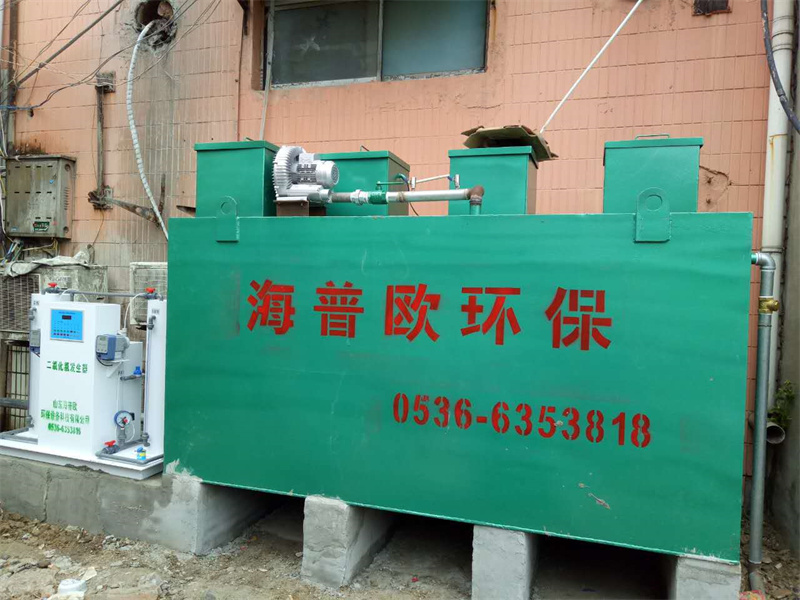
This type of equipment is suitable for small medical facilities with low sewage discharge (daily treatment capacity of 0.5-50m³), such as small clinics, community hospitals, and dental institutions. It features small size, easy installation, and high degree of automation. Working principle: Adopts a combined process of "pretreatment + biochemical treatment + advanced disinfection". In the pretreatment stage, grille and sedimentation tank are used to remove suspended impurities in the sewage; biochemical treatment adopts biofilm method or activated sludge method to decompose organic matter in the sewage; advanced disinfection commonly uses ultraviolet, chlorine dioxide and other technologies to kill pathogenic microorganisms, ultimately achieving compliance of sewage.
(II) Medium-Scale Modular Medical Sewage Treatment Equipment
Targeting facilities with a daily treatment capacity of 50-500m³ such as county-level hospitals and specialized hospitals, the modular design can be flexibly combined to meet different water quality and quantity requirements. Working principle: The core process is "MBR (Membrane Bioreactor) + disinfection system". The MBR membrane module integrates biological reaction and solid-liquid separation, intercepting microorganisms in activated sludge and improving the efficiency of organic matter degradation; subsequent ozone disinfection or sodium hypochlorite disinfection ensures that the pathogen removal rate in sewage meets the standard, while reducing chemical residue.
(III) Large-Scale Centralized Medical Sewage Treatment Equipment
Suitable for scenarios with a daily treatment capacity of over 500m³ such as Grade A tertiary hospitals and medical parks, it requires customized design of treatment processes according to sewage quality. Working principle: Adopts a multi-stage process of "pretreatment + anaerobic/aerobic biochemical treatment + advanced purification + disinfection". In the pretreatment stage, regulating tank and oil separator are added to cope with complex water quality fluctuations; biochemical treatment adopts processes such as A/O (Anoxic/Oxic) and A²/O (Anaerobic/Anoxic/Oxic) to efficiently remove pollutants such as ammonia nitrogen and total phosphorus; advanced purification reduces effluent suspended solids and COD through filtration, adsorption and other technologies; final disinfection uses dual disinfection of ultraviolet and chlorine dioxide to ensure complete compliance of effluent.
III. Core Technical Highlights of Medical Sewage Treatment Equipment
(I) Integration of Efficient Disinfection Technologies
The equipment integrates multiple disinfection methods. Ultraviolet disinfection has the advantages of no chemical residue and fast sterilization speed, while chlorine dioxide disinfection is suitable for sewage with high concentration of pathogens. The dual disinfection mode can meet the needs of different scenarios, ensuring a sterilization rate of over 99.9% which complies with medical sewage disinfection standards.
(II) Intelligent Operation Control System
Equipped with a PLC (Programmable Logic Controller) intelligent control system, it can real-time monitor key parameters such as sewage flow, pH value, and residual chlorine, and automatically adjust the equipment operation status. It supports remote monitoring and fault alarm, reducing manual operation and maintenance costs, and improving equipment operation stability and treatment efficiency.
(III) Energy-Saving and Environmental-Friendly Design
Adopts high-efficiency aeration devices and energy-saving motors to reduce equipment operation energy consumption; biological carrier technology is used in the biochemical treatment stage to enhance microbial activity and reduce chemical dosage; some equipment can achieve sludge reduction treatment, lowering solid waste disposal costs and complying with the concept of green environmental protection.
(IV) Strong Shock Load Resistance
In response to the characteristics of large fluctuations in water quality and quantity of medical sewage, the equipment is designed with a regulating tank and buffer system, which can effectively cope with sewage impact during peak diagnosis and treatment periods, ensuring stable compliance of effluent quality and avoiding non-compliance issues caused by water quality fluctuations.
IV. Key Factors for Selection of Medical Sewage Treatment Equipment
(I) Clarify Sewage Quality and Treatment Standards
First, test the types of pollutants in medical sewage (such as pathogen concentration, chemical content, heavy metal content, etc.). Combined with local environmental protection requirements and the "Discharge Standard of Water Pollutants for Medical Institutions", determine the effluent standards to be met such as Grade 1A, Grade 1B or other standards, so as to select the appropriate treatment process.
(II) Match Treatment Scale
Select the equipment model according to the daily average sewage discharge of the medical institution. Small-scale institutions can choose integrated equipment, while large-scale hospitals need to adopt modular or centralized equipment. At the same time, reserve 10%-20% of treatment capacity to cope with future business expansion or sewage volume growth.
(III) Attach Importance to Equipment Stability and Operation Convenience
Prioritize products from manufacturers with mature technology and good reputation. The equipment must pass relevant quality certifications and environmental testing. Pay attention to the difficulty of equipment operation and maintenance, and select models that are easy to disassemble, clean, and replace consumables to reduce long-term operation and maintenance costs.
(IV) Consider Installation and Site Conditions
Select the equipment installation method (ground installation, underground burial, etc.) according to the site space and terrain conditions of the medical institution. Integrated equipment does not require complex civil engineering, making it suitable for institutions with limited space; centralized equipment requires advance planning of civil engineering construction and pipeline laying to ensure normal operation of the equipment.
V. Key Points for Installation and Daily Maintenance of Medical Sewage Treatment Equipment
(I) Standardize Installation Process
Equipment installation must be operated by professional technicians, and pipeline connection, circuit commissioning and equipment fixing must be carried out in strict accordance with the installation manual provided by the manufacturer. After installation, a water test should be conducted to check the equipment tightness and operation status to ensure no leakage or failure.
(II) Core Daily Maintenance Matters
- Regularly clean suspended solids and sediments in grilles and sedimentation tanks to avoid pipeline blockage affecting treatment efficiency.
- Monitor the operation status of the disinfection system, replace ultraviolet lamps and replenish disinfection chemicals in a timely manner to ensure sterilization effect.
- Regularly inspect power equipment such as water pumps and fans, add lubricating oil, and clean dust on the equipment surface to extend equipment service life.
- Record equipment operation parameters (flow rate, pH value, residual chlorine, etc.) and establish an operation and maintenance file to facilitate fault diagnosis and equipment maintenance.
- Conduct comprehensive equipment maintenance 1-2 times a year, maintain and replace core components such as biochemical systems and membrane modules to ensure long-term stable operation of the equipment.
VI. Industry Standards and Compliance Requirements for Medical Sewage Treatment Equipment
The production and application of medical sewage treatment equipment must strictly comply with multiple national and industry standards. In addition to the "Discharge Standard of Water Pollutants for Medical Institutions" (GB18466-2005), it must also meet the requirements of relevant laws and regulations such as the "Water Pollution Prevention and Control Law" and the "Regulations on the Administration of Medical Waste".
The equipment must pass environmental protection product certification, ISO quality system certification, etc., to ensure that product quality and treatment effect meet the standards. After purchasing the equipment, medical institutions need to register with local environmental protection departments in a timely manner and accept regular sewage discharge testing to ensure that the treated sewage continuously meets the discharge standards and avoid penalties for illegal discharge.
VII. Development Trends of Medical Sewage Treatment Equipment
With the continuous improvement of environmental protection requirements and the upgrading of medical technology, medical sewage treatment equipment is developing towards intelligence, high efficiency, and low carbonization. In the future, equipment will further integrate IoT (Internet of Things) technology to achieve full-process intelligent monitoring and data analysis, improving operation and maintenance efficiency; the application of new membrane technologies and advanced oxidation technologies will further improve pollutant removal rate and reduce treatment costs; at the same time, equipment will pay more attention to energy conservation, consumption reduction and resource recycling, promoting the green and sustainable development of the medical industry.
Medical sewage treatment equipment is a core equipment for medical institutions to meet environmental protection standards and ensure public health. Its selection, installation and operation and maintenance directly affect the sewage treatment effect and environmental compliance. Medical institutions need to select professional and compliant equipment according to their own needs, strengthen daily maintenance and management, and ensure compliance discharge of sewage. If you need a customized medical sewage treatment equipment solution, or want to learn about the technical parameters and quotations of different models of equipment, you can contact our technical team at any time for one-on-one professional consulting services.
Related news


Contact: +86 18016210178 (Ms.Liu)
Add:No.56, Donghuan Road, Zhucheng City, Weifang City, Shandong Province