


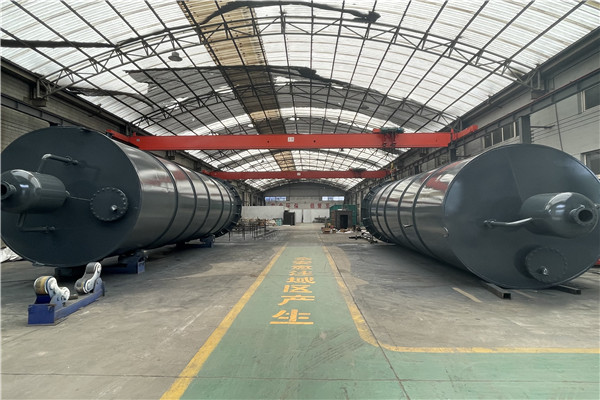
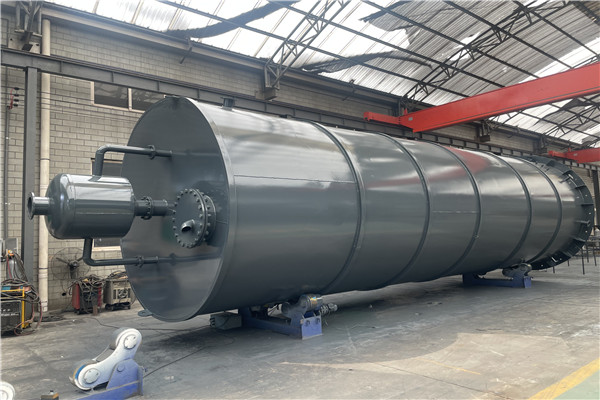
Livestock wastewater treatment equipment - anaerobic tower
Category
零售价
市场价
重量
库存
隐藏域元素占位
- Overview
-
- Commodity name: Livestock wastewater treatment equipment - anaerobic tower
At present, the anaerobic tower has been successfully applied in the treatment of wastewater from potato processing, beer production, food processing, citric acid manufacturing, and other industries. Practice has proven that the organic matter removal capacity of this technology is far superior to that of conventional anaerobic treatment technologies (such as UASB). Moreover, the IC reactor features small volume, low investment, small floor space, and stable operation, making it a high-efficiency anaerobic treatment technology worthy of promotion.
Product Introduction
At present, the anaerobic tower has been successfully applied in the treatment of wastewater from potato processing, beer production, food processing, citric acid manufacturing, and other industries. Practice has proven that the organic matter removal capacity of this technology is far superior to that of conventional anaerobic treatment technologies (such as UASB). Moreover, the IC reactor features small volume, low investment, small floor space, and stable operation, making it a high-efficiency anaerobic treatment technology worthy of promotion.
Working Principle
The IC reactor is similar to a system composed of two UASB reactors connected in series. Divided by function, the reactor is divided into 5 zones from bottom to top: the mixing zone, the first anaerobic zone, the second anaerobic zone, the sedimentation zone, and the gas-liquid separation zone.
-
Mixing Zone: The influent water at the bottom of the reactor, granular sludge, and the sludge-water mixture returned from the gas-liquid separation zone are effectively mixed in this zone.
-
First Anaerobic Zone: The sludge-water mixture formed in the mixing zone enters this zone. Under the action of high-concentration sludge, most of the organic matter is converted into biogas. The upward flow of the mixed liquid and the violent disturbance of biogas cause the sludge in this reaction zone to be in an expanded and fluidized state, which enhances the surface contact between sludge and water and thus maintains the high activity of the sludge. As the biogas production increases, part of the sludge-water mixture is lifted by the biogas to the gas-liquid separation zone at the top.
-
Gas-Liquid Separation Zone: The biogas in the lifted mixture is separated from the sludge-water here and discharged out of the treatment system. The sludge-water mixture flows back to the lower mixing zone along the return pipe and is fully mixed with the sludge at the bottom of the reactor and the influent water, realizing the internal circulation of the mixed liquid.
-
Second Anaerobic Zone: Except for part of the wastewater treated in the first anaerobic zone which is lifted by biogas, the rest enters the second anaerobic zone through the three-phase separator. The sludge concentration in this zone is relatively low, and most of the organic matter in the wastewater has been degraded in the first anaerobic zone, so the biogas production is relatively small. The biogas is introduced into the gas-liquid separation zone through the biogas pipe, causing minimal disturbance to the second anaerobic zone, which provides favorable conditions for sludge retention.
-
Sedimentation Zone: The sludge-water mixture in the second anaerobic zone undergoes solid-liquid separation in the sedimentation zone. The supernatant is discharged through the outlet pipe, and the precipitated granular sludge returns to the sludge bed of the second anaerobic zone.
It can be seen from the working principle of the IC reactor that the reactor uses two layers of three-phase separators to achieve SRT > HRT (Sludge Retention Time > Hydraulic Retention Time), obtaining high sludge concentration; through the violent disturbance of a large amount of biogas and internal circulation, the sludge and water are fully contacted, achieving a good mass transfer effect.
Advantages
The structure and working principle of the IC reactor determine that it has more advantages than other reactors in controlling the influencing factors of anaerobic treatment.
-
High Volumetric Load: The IC reactor has high sludge concentration, large microbial biomass, and internal circulation, resulting in good mass transfer effect. The influent organic load can be more than 3 times that of conventional anaerobic reactors.
-
Cost and Space Saving: The volumetric load rate of the IC reactor is about 3 times that of the conventional UASB reactor, and its volume is equivalent to about 1/4 to 1/3 of that of the conventional reactor, which greatly reduces the capital investment of the reactor. In addition, the IC reactor has a large height-to-diameter ratio (usually 4-8), so it occupies extremely small floor space, making it very suitable for industrial and mining enterprises with tight land resources.
-
Strong Shock Load Resistance: When treating low-concentration wastewater (COD = 2000-3000 mg/L), the internal circulation flow in the reactor can reach 2-3 times the influent flow; when treating high-concentration wastewater (COD = 10000-15000 mg/L), the internal circulation flow can reach 10-20 times the influent flow. A large amount of circulating water is fully mixed with the influent water, which fully dilutes the harmful substances in the raw water and greatly reduces the impact of toxic substances on the anaerobic digestion process.
-
Strong Low-Temperature Resistance: The impact of temperature on anaerobic digestion is mainly reflected in its influence on the digestion rate. Due to the large amount of microorganisms contained in the IC reactor, the impact of temperature on anaerobic digestion becomes less significant and severe. Generally, the anaerobic digestion of the IC reactor can be carried out under normal temperature conditions (20-25 ℃), which reduces the difficulty of digestion heat preservation and saves energy.
-
pH Buffering Capacity: The internal circulation flow is equivalent to the effluent reflux of the first anaerobic zone, which can use the alkalinity converted from COD to buffer the pH value, maintaining a stable pH in the reactor. At the same time, it can also reduce the amount of alkali added to the influent water.
-
Internal Automatic Circulation Without External Power: The reflux of conventional anaerobic reactors is realized through external pressure, while the IC reactor uses the biogas produced by itself as the power for lifting to realize the internal circulation of the mixed liquid. There is no need to set up a pump for forced circulation, which saves power consumption.
Keywords:
Messages

Contact: +86 18016210178 (Ms.Liu)
Add:No.56, Donghuan Road, Zhucheng City, Weifang City, Shandong Province