


mechanical filter
Category
零售价
市场价
重量
库存
隐藏域元素占位
- Overview
-
- Commodity name: mechanical filter
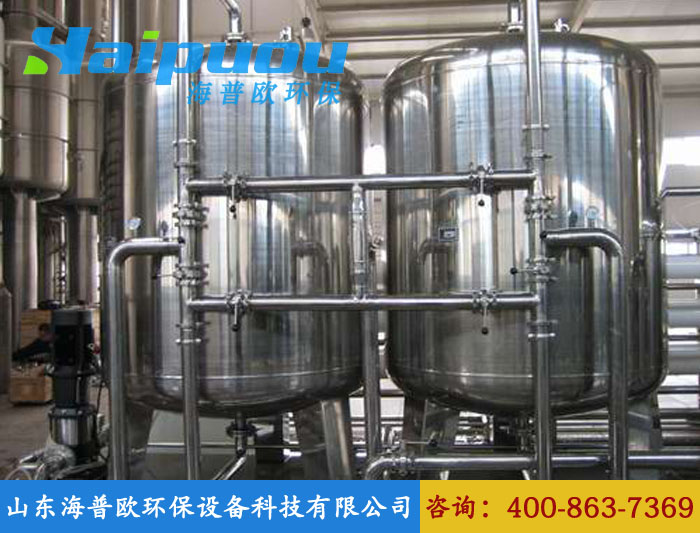
A mechanical filter uses one or more filtering media. Under a certain pressure, the raw liquid passes through the media to remove impurities, thereby achieving the purpose of filtration. The fillers installed inside are generally quartz sand, anthracite, granular porous ceramics, manganese sand, etc., and users can choose to use them according to actual conditions.
Mechanical Filter
A mechanical filter uses one or more filtering media. Under a certain pressure, the raw liquid passes through the media to remove impurities, thereby achieving the purpose of filtration. The fillers installed inside are generally quartz sand, anthracite, granular porous ceramics, manganese sand, etc., and users can choose to use them according to actual conditions.
Mechanical filters mainly use fillers to reduce the turbidity of water, trap and remove suspended solids, organic matter, colloidal particles, microorganisms, chlorine odor, and some heavy metal ions in water. They are one of the traditional water treatment methods for purifying feed water.
Working Principle
A mechanical filter (also known as a multi-media filter or quartz sand filter) is a pressure-type filter. It uses refined quartz sand filter media filled in the filter. When the inlet water flows through the filter layer from top to bottom, suspended solids and colloidal particles in the water are removed, thus reducing the turbidity of the water.
Performance
It is mainly used for turbidity removal in water treatment, as well as pre-treatment for the front end of water softening, electrodialysis, and reverse osmosis systems. It can also be applied to surface water, groundwater, and other water sources. It can effectively remove suspended solids, organic matter, colloids, sediment, and other impurities from water.
Application Scope
In the water treatment process, it is mainly used for turbidity removal in feed water treatment, and as front-end pre-treatment for reverse osmosis and ion exchange softening & desalination systems. It can also be used to remove sediment from surface water and groundwater. The inlet water turbidity is required to be less than 20 NTU (Nephelometric Turbidity Units), and the outlet water turbidity can reach below 3 NTU.
It is widely used in fields such as electronic power, petrochemical industry, metallurgical electroplating, papermaking & textile, pharmaceutical dialysis, food & beverage, domestic drinking water, factory/enterprise water supply, and swimming pools. It can meet the liquid filtration needs of various industries.
Classification and Characteristics
Classification
- Quartz sand filter (sand filter)
- Activated carbon filter (carbon filter)
- Multi-media filter
- Iron & manganese removal filter (manganese sand filter)
- Fiber ball filter
- Hair filter
Characteristics
- Single-flow mechanical filter: It has a simple pipeline structure and stable operation. The filtration flow rate is generally 4–50 m/h, and the operation cycle is usually 8 hours.
- Dual-flow mechanical filter: It is equipped with water inlet devices at the upper and lower ends, and a water outlet device in the middle. Its advantages include large filtration water volume, high pollution removal capacity, and a long operation cycle (usually 20 hours). However, it has disadvantages such as a relatively complex pipeline system, unstable operation, and difficulty in backwashing and media replacement.
In addition, mechanical filters generally have the following advantages:
- Low equipment cost, low operating cost, and simple management.
- The filter media can be reused multiple times after backwashing, with a long service life.
- Good filtration effect and small floor space.
Keywords:
Messages

Contact: +86 18016210178 (Ms.Liu)
Add:No.56, Donghuan Road, Zhucheng City, Weifang City, Shandong Province