


IC anaerobic tower
Category
零售价
市场价
重量
库存
隐藏域元素占位
- Overview
-
- Commodity name: IC anaerobic tower
In recent years, in response to market demands, Shandong Haipuou Environmental Protection Equipment Technology Co., Ltd. has conducted extensive and in-depth research on the IC (Internal Circulation) anaerobic wastewater treatment technology. While continuously introducing and absorbing advanced technologies at home and abroad, the company has actively explored and developed new processes and structures for IC anaerobic treatment. This has further improved the efficiency of IC anaerobic reactors, reduced investment costs, expanded application fields, and achieved a number of outcomes. In particular, breakthrough progress has been made in the treatment of papermaking wastewater, pharmaceutical wastewater, food processing wastewater, printing and dyeing wastewater, and other types of wastewater. The company has accumulated rich experience and achieved ideal results in a number of IC anaerobic wastewater treatment projects.
In recent years, in response to market demands, Shandong Haipuou Environmental Protection Equipment Technology Co., Ltd. has conducted extensive and in-depth research on the IC (Internal Circulation) anaerobic wastewater treatment technology. While continuously introducing and absorbing advanced technologies at home and abroad, the company has actively explored and developed new processes and structures for IC anaerobic treatment. This has further improved the efficiency of IC anaerobic reactors, reduced investment costs, expanded application fields, and achieved a number of outcomes. In particular, breakthrough progress has been made in the treatment of papermaking wastewater, pharmaceutical wastewater, food processing wastewater, printing and dyeing wastewater, and other types of wastewater. The company has accumulated rich experience and achieved ideal results in a number of IC anaerobic wastewater treatment projects.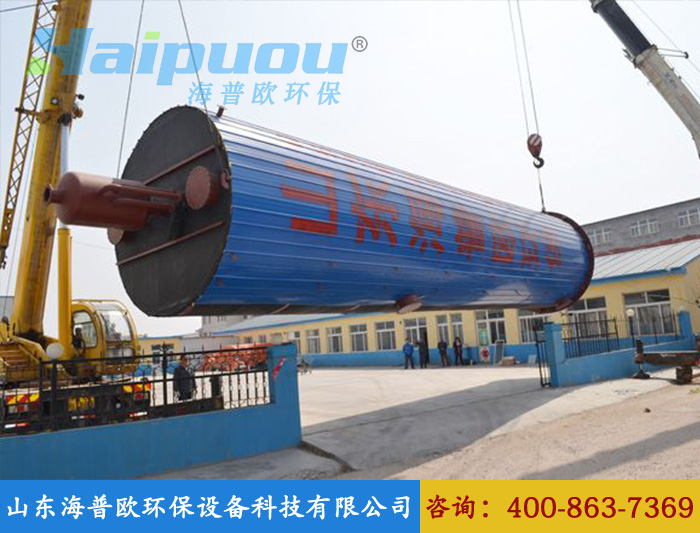
I. Overview of IC Anaerobic Reactor Technology for Wastewater Treatment
Anaerobic biological treatment utilizes the metabolic characteristics of anaerobic microorganisms. Without the need for external energy input, it uses reduced organic matter as a hydrogen acceptor and simultaneously produces methane gas with energy value. The IC reactor is an internal circulation anaerobic reactor, consisting of five parts: the mixing zone, the sludge expansion zone, the internal circulation system, the fine treatment zone, and the sedimentation zone. It is suitable not only for high-concentration organic wastewater but also for low-concentration organic wastewater. The IC anaerobic biological treatment method features high COD/BOD removal rates, low energy consumption, small amount of excess sludge, and high COD volumetric load (up to approximately 30 kgCOD/(m³·d)). It converts pollutants into methane gas with economic value, thus achieving significant economic and environmental benefits.
II. Advantages of IC Anaerobic Reactors
-
High Volumetric Load: The IC reactor has a high sludge concentration and a large amount of microorganisms, coupled with internal circulation, which ensures good mass transfer efficiency. The influent organic load can be more than 3 times that of conventional anaerobic reactors, resulting in high COD and BOD removal rates of the IC reactor.
-
Low Investment and Small Floor Space: Due to the high volumetric load rate and large height-to-diameter ratio (usually 4–8 times) of the IC reactor, it requires lower capital investment, occupies less space, and is easy to operate with low operating costs.
Strong Shock Load Resistance: The IC reactor adopts internal circulation, so the concentration of raw water can be adjusted by a large amount of internally circulated water. At the same time, the full mixing of a large volume of internally circulated water with the influent water fully dilutes harmful substances in the raw water, reducing the impact of toxic substances on the anaerobic digestion process.
-
Low Operating Cost and Energy Consumption: As the IC reactor relies on internal circulation, the circulation of the mixed liquid is driven by the biogas produced by the reactor itself, eliminating the need for external power. Additionally, it has the ability to buffer pH, reducing the amount of alkali added and thus lowering operating costs.
-
Flexible Operation: When the supply of wastewater and nutrients is stopped, the IC anaerobic bacteria (granular sludge) can maintain good activity and sedimentation performance for a long period (about one year or more). Therefore, the IC anaerobic reactor can operate intermittently or seasonally.
-
Favorable Social and Economic Benefits: The IC anaerobic treatment method produces a small amount of excess sludge, which is highly mineralized and can be used as farm fertilizer or sold as seed sludge for newly commissioned anaerobic wastewater treatment plants, bringing good economic benefits. It also achieves good results in the resource utilization of biochemical sludge. Meanwhile, a large amount of COD pollutants are converted into methane gas—a clean energy source that can be utilized or used for power generation. Therefore, the IC anaerobic wastewater treatment system can serve as the core technology of an integrated system that combines environmental protection, energy recovery, and a 良性 ecological cycle (benign ecological cycle), delivering excellent social and economic benefits.
Keywords:
Messages

Contact: +86 18016210178 (Ms.Liu)
Add:No.56, Donghuan Road, Zhucheng City, Weifang City, Shandong Province