


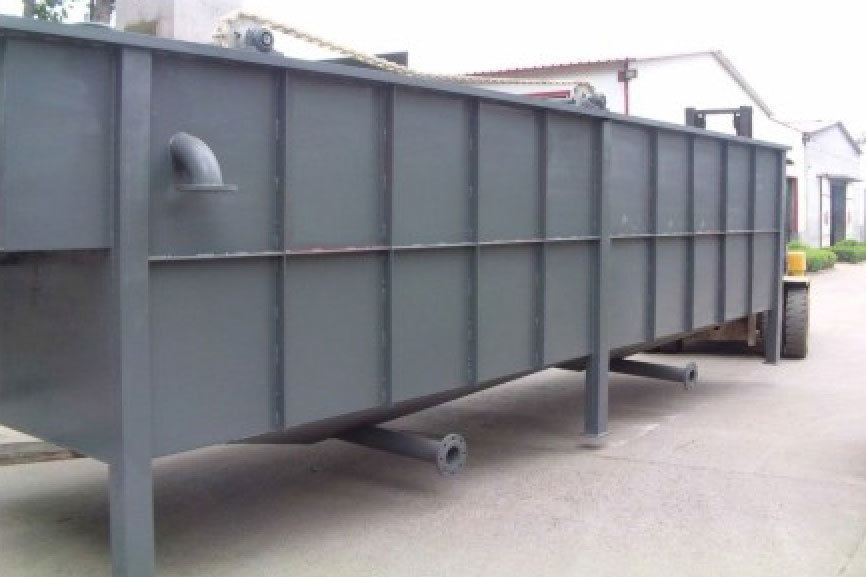
Spray tower emulsion oily wastewater
Category
零售价
市场价
重量
库存
隐藏域元素占位
- Overview
-
- Commodity name: Spray tower emulsion oily wastewater
Oil substances usually exist in the following forms in wastewater: (1) Floating oil: The particle size of oil droplets is larger than 15 μm, and it can be easily separated from wastewater. The oil particles dispersed in wastewater are relatively large (with a particle size larger than 100 μm), making them easy to separate from wastewater. In petroleum wastewater, this type of oil accounts for 60% to 80% of the total oil content in the water. (2) Dispersed oil: The particle size of oil droplets is larger than 1 μm, and it is suspended in water. (3) Emulsified oil: The particle size of oil droplets is smaller than 1 μm. The oil particles dispersed in wastewater are extremely small and exist in an emulsified state, which makes them difficult to separate from wastewater. (4) Dissolved oil: It refers to the state where oil is dissolved in water.
Oil-bearing wastewater mainly comes from industrial sectors such as petroleum, petrochemicals, iron and steel, coking, gas generation stations, and mechanical processing. Among the oil-based pollutants in wastewater, except for heavy tar (with a relative density of more than 1.1), the relative density of all other oil pollutants is less than 1.
Oil substances usually exist in the following forms in wastewater:
(1) Floating oil: The particle size of oil droplets is larger than 15 μm, and it can be easily separated from wastewater. The oil particles dispersed in wastewater are relatively large (with a particle size larger than 100 μm), making them easy to separate from wastewater. In petroleum wastewater, this type of oil accounts for 60% to 80% of the total oil content in the water.
(2) Dispersed oil: The particle size of oil droplets is larger than 1 μm, and it is suspended in water.
(3) Emulsified oil: The particle size of oil droplets is smaller than 1 μm. The oil particles dispersed in wastewater are extremely small and exist in an emulsified state, which makes them difficult to separate from wastewater.
(4) Dissolved oil: It refers to the state where oil is dissolved in water.
The oil substances contained in oil-bearing wastewater include natural petroleum, petroleum products, tar and its distillates, as well as edible animal and vegetable oils and fats. In terms of water body pollution, petroleum and tar are the main pollutants. The oil concentration in wastewater discharged by different industrial sectors varies significantly. For example, the oil content of wastewater generated during the oil refining process is approximately 150–1000 mg/L; the tar content in coking wastewater is about 500–800 mg/L; and the tar content in wastewater discharged from gas generation stations can reach 2000–3000 mg/L. Therefore, for the treatment of oil-bearing wastewater, an oil separator should first be used to recover floating oil or heavy oil. The treatment efficiency is 60% to 80%, and the oil content in the effluent is approximately 100–200 mg/L. Emulsified oil and dispersed oil in wastewater are more difficult to treat, so measures should be taken to prevent or reduce emulsification. One method is to pay attention to reducing the emulsification of oil in wastewater during the production process; the second is to minimize the number of times wastewater is lifted by pumps during the treatment process to avoid increasing the degree of emulsification. Common treatment methods include air flotation and demulsification.

If oil-bearing wastewater is not recycled and treated, it will cause waste; when discharged into rivers, lakes, or bays, it will pollute water bodies and affect the survival of aquatic organisms; when used for agricultural irrigation, it will block soil pores and hinder the growth of crops.
In the treatment of oil-bearing wastewater, priority should be given to recovering oil substances and making full use of the treated water resources. Therefore, an oil separator can first be used for the treatment of oil-bearing wastewater to recover floating oil or heavy oil. Oil separators are suitable for separating oil with relatively large particles in wastewater, with a treatment efficiency of 60% to 80% and an oil content of approximately 100–200 mg/L in the effluent. However, fine oil droplets and emulsified oil in wastewater are very difficult to remove.
Keywords:
Messages


Contact: +86 18016210178 (Ms.Liu)
Add:No.56, Donghuan Road, Zhucheng City, Weifang City, Shandong Province