


- Overview
-
- Commodity name: Emulsion breaking in workshop wastewater
Emulsion wastewater has a wide range of sources, mainly originating from wastewater generated in the petroleum, petrochemical, steel, coking, gasification, machinery, railway transportation, textile, cold rolling, and metal wire drawing industries. Currently, with rapid industrial development and increasing product demand, the amount of wastewater generated is also increasing. The emulsion wastewater source used in this study is precisely emulsion wastewater generated by the metal wire drawing industry. Emulsion wastewater contains a wide variety of substances, including oils, surfactants, sodium nitrite, and their decomposition products, many of which are carcinogenic. When oils and surfactants mix and enter natural water bodies, they easily diffuse to form a stable film, covering the water surface and hindering oxygen dissolution, causing oxygen deficiency, mass mortality of aquatic animals, and producing a foul odor. Fish fry hatched in waters containing oily emulsion wastewater are mostly deformed and prone to death. Furthermore, diffusion and wind can expand the pollution area. Emulsion wastewater has a high concentration of organic pollutants, is difficult to biodegrade, and has a COD exceeding tens of thousands, making treatment challenging.
Emulsion wastewater is milky white. This hydration layer creates spatial hindrance, making it difficult for colloidal particles to aggregate, thus maintaining the stable emulsion state of the wastewater. Emulsion wastewater has a relatively high COD value, generally 104-105 mg/L, and a turbidity exceeding 2340 NTU, with a pH of 8.
Several treatment technologies exist for emulsion wastewater, which can be classified according to their working principle and the target pollutants into physicochemical methods (air flotation, membrane separation, adsorption, coarse granulation), chemical methods (chemical flocculation, chemical oxidation, electrochemical methods), and biological treatment methods (activated sludge). Each individual treatment method has its advantages but also limitations. In practice, depending on the wastewater composition and properties, the form of oil present, the discharge method, and environmental and economic requirements, several methods are combined to form a multi-stage treatment process, thereby achieving good oil removal results and ensuring the effluent quality meets wastewater discharge standards.
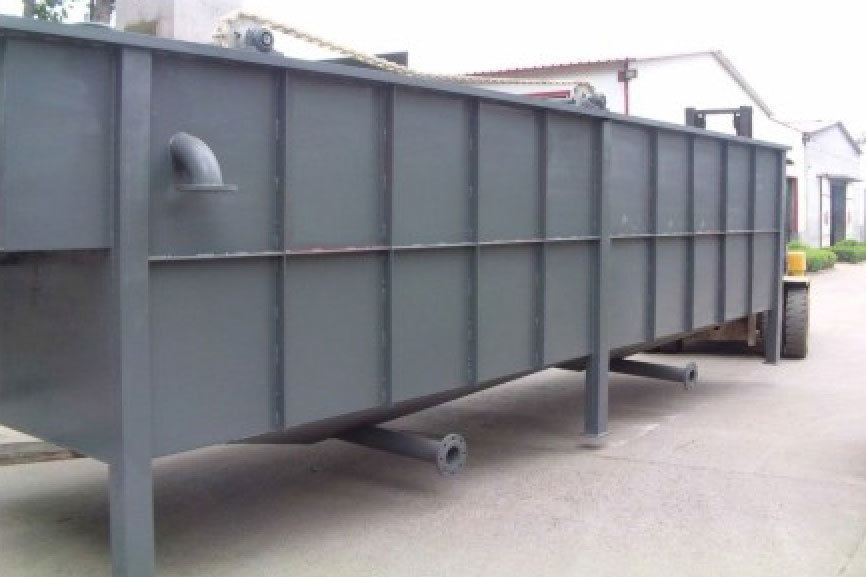
The emulsion wastewater intermittently discharged from the production workshop enters the wastewater collection tank through pipelines. Wastewater of different concentrations is mixed in the collection tank for a period of time to form a system with uniform impurity content. The water pump is then used to pump the wastewater into the pH adjustment tank, where NaOH solution (caustic soda) or quicklime is used to adjust the pH of the wastewater to 8-9. The wastewater then enters the flocculation reaction tank, where demulsifiers and flocculants are added. The reaction is carried out for about 0.5 hours with stirring. After stirring is stopped, the wastewater is allowed to stand for about 1 hour, resulting in stratification. The lower layer of sludge is pumped into a plate and frame filter press for filtration, and the dried sludge is sent to a solid waste landfill for disposal. The filtrate and the clear liquid from the flocculation reaction are collected and sent to a deep oxidation reaction tank, where oxidants are added. The reaction is carried out for about 1 hour, and after analysis and approval, the wastewater is discharged in compliance with standards.

Keywords:
Messages


Contact: +86 18016210178 (Ms.Liu)
Add:No.56, Donghuan Road, Zhucheng City, Weifang City, Shandong Province