


- Overview
-
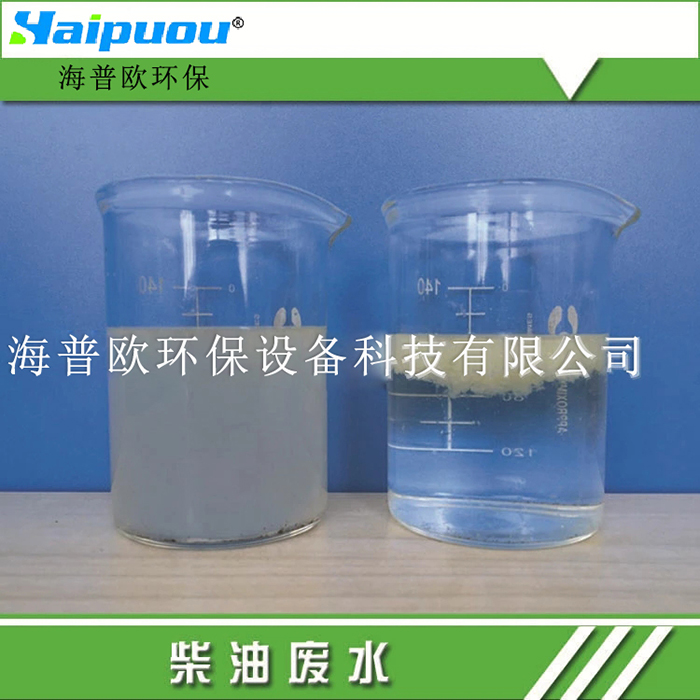
- Commodity name: Diesel wastewater
Coal tar wastewater mainly comes from processes such as coking, gas purification, and refining of chemical products, with complex water quality components. During coking, coal materials undergo thermal cracking and release combined water. Water vapor is drawn out of the coke oven together with crude dry distillation gas, and condensed into condensate water after cooling in the primary cooler—this is called residual ammonia water. This wastewater contains high concentrations of ammonia, phenols, cyanides, sulfides, and organic oils, making it the main source of wastewater in sewage treatment stations.
Coal tar wastewater has a complex composition, with pollutants divided into organic and inorganic categories. Inorganic pollutants generally exist in the form of ammonium salts, while organic pollutants are dominated by phenolic compounds, including aliphatic compounds, heterocyclic compounds, and polycyclic aromatic hydrocarbons. The water quality fluctuates significantly, containing a large amount of refractory substances and showing poor biodegradability.
Process Flow of Coal Tar Wastewater Treatment Equipment
Based on the water quality characteristics of coal tar wastewater, the design scheme of the treatment equipment adopts the process of "Oil Separation + Anaerobic + Anoxic + Aerobic + Coagulation Sedimentation + Sand Filter".
- Pretreatment with Oil Separator: The oil separator is used for the pretreatment of coal tar wastewater. It utilizes the density difference between oil and water in the wastewater to separate and remove oil, achieving the goal of oil removal from wastewater.
- A2/O (Anaerobic-Anoxic-Oxic) Equipment for Coal Tar Wastewater Recovery and Treatment: This equipment can effectively remove COD (Chemical Oxygen Demand) with a removal rate of over 90%, and also has a significant effect on nitrogen and phosphorus removal with a removal efficiency of over 80%. A2/O not only improves the biodegradability of wastewater but also achieves efficient ammonia nitrogen removal.
Advantages of Coal Tar Wastewater Treatment Equipment
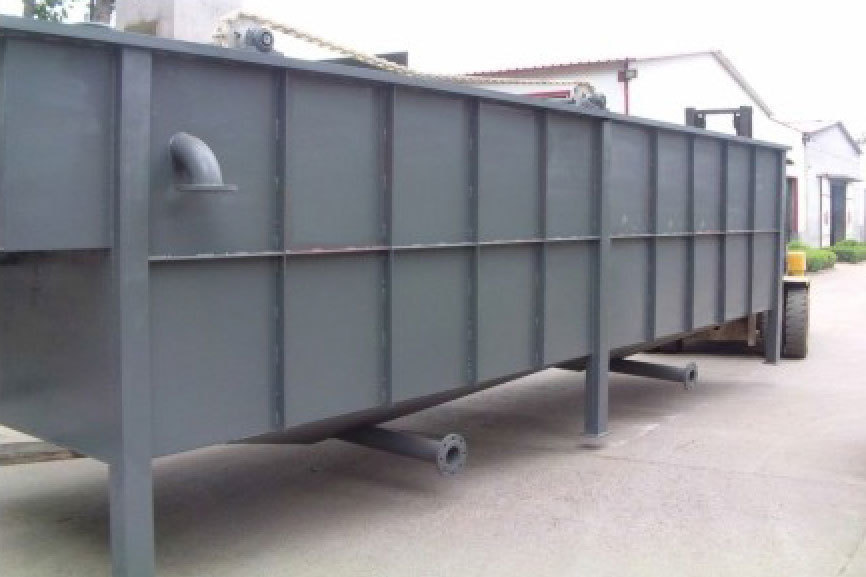
- The equipment is made of carbon steel with anti-corrosion treatment or stainless steel components, featuring excellent properties such as corrosion resistance and anti-aging. Its service life can reach more than 30 years. It is lightweight, easy to transport and install.
- This set of coal tar wastewater treatment equipment adopts anti-corrosion structures made of FRP (Fiberglass Reinforced Plastic), carbon steel, and stainless steel, assembled on-site. It maximizes system integration and reduces floor space.
- The coal tar wastewater treatment equipment can be used individually or in multiple combinations, offering flexibility. It is installed below the ground surface, and the ground above the equipment can be used for greening or other purposes, eliminating the need for building construction, heating, and thermal insulation.
- The entire set of coal tar wastewater treatment equipment is not limited by the discharge volume of coal tar wastewater. Usually, no full-time personnel are required for management—only occasional maintenance and upkeep of the equipment are needed, resulting in low management costs.
- A design feature of the coal tar wastewater treatment equipment is that the wastewater treatment project can be integrated into a landscape. The treatment system of the entire set of wastewater treatment equipment is equipped with a PLC automatic electrical control system and an equipment fault alarm system, ensuring safe and reliable operation.
Keywords:
Messages


Contact: +86 18016210178 (Ms.Liu)
Add:No.56, Donghuan Road, Zhucheng City, Weifang City, Shandong Province