


Ozone catalytic oxidation reactor
Category
零售价
市场价
重量
库存
隐藏域元素占位
- Overview
-
- Commodity name: Ozone catalytic oxidation reactor
As a new technology in the advanced sewage treatment process, the ozone catalytic oxidation process has attracted widespread attention due to its advantages such as strong oxidizing property, fast reaction speed, low investment, good treatment effect, low operating cost, and no secondary pollution. This process can effectively remove inorganic substances in water, such as chromaticity, odor, iron, and manganese, and significantly reduce pollutant indicators of sewage like COD (Chemical Oxygen Demand), TOC (Total Organic Carbon), and ultraviolet absorption value. It is mainly used for the treatment of secondary effluent, municipal sewage, coking wastewater, printing and dyeing wastewater, landfill leachate, pharmaceutical wastewater, chemical wastewater, etc.
I. Principle of Ozone in Sewage Treatment
As a new technology in the advanced sewage treatment process, the ozone catalytic oxidation process has attracted widespread attention due to its advantages such as strong oxidizing property, fast reaction speed, low investment, good treatment effect, low operating cost, and no secondary pollution. This process can effectively remove inorganic substances in water, such as chromaticity, odor, iron, and manganese, and significantly reduce pollutant indicators of sewage like COD (Chemical Oxygen Demand), TOC (Total Organic Carbon), and ultraviolet absorption value. It is mainly used for the treatment of secondary effluent, municipal sewage, coking wastewater, printing and dyeing wastewater, landfill leachate, pharmaceutical wastewater, chemical wastewater, etc.
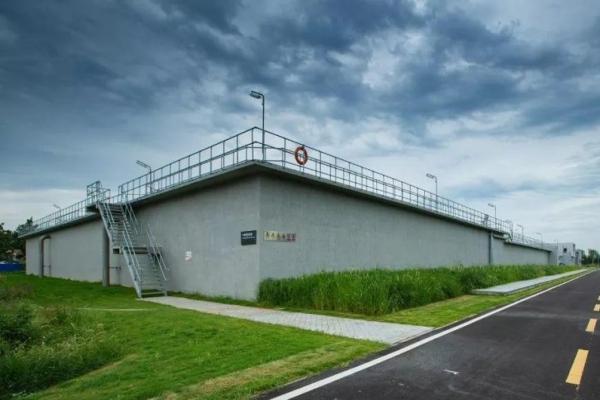
II. Application of Ozone in Advanced Sewage Treatment
-
Industrial organic wastewater and cyanide-containing wastewaterOzone is a strong oxidant that can convert toxic pollutants into non-toxic substances. It has strong oxidation capacity in wastewater treatment, can decompose organic matter that is difficult to be destroyed by other oxidants, and features safe reaction and short reaction time. The residual ozone can be converted into oxygen, which is not only harmless but also beneficial. Ozone can be used for disinfection, deodorization, decolorization, iron and manganese removal, phenol removal, cyanide removal, detergent removal, oil removal, etc.
-
For heavy oil cracking wastewater, when the pH is approximately 11.4, the cyanide removal efficiency reaches 79.3%; for electroplating wastewater with a cyanide concentration of 32.5 mg/L, the cyanide removal rate reaches 98.9%; for acrylonitrile wastewater containing 102 mg/L of acrylonitrile, ozone treatment can completely remove acrylonitrile.
-
Ozone can decompose organic substances such as hydrocarbons, aldehydes, cyanides, phenols, phosphorus, sulfur, nitrogen oxides, and nitrates, and remove metal ions such as iron, manganese, and magnesium.
-
Phenol-containing wastewaterIt includes phenol, pyrogallol, cresol, xylenol, etc. Phenols can denature proteins and damage the liver, kidneys, and nervous system. Phenol-containing wastewater comes from industries such as gas production, coking, petroleum refining, chemical engineering, pharmaceuticals, pesticides, textile and rubber manufacturing, dye production, and wood processing.
-
Sulfur-containing wastewaterSulfides have a foul odor, are toxic and corrosive, which can cause the death of organisms in water and reduce pH value and dissolved oxygen indicators. Sulfur-containing wastewater is generated from industries such as petroleum, chemical engineering, coking, papermaking, fur processing, leather manufacturing, livestock slaughtering, textile dyeing, and chemical fiber production.


-
Cyanide-containing wastewaterPotassium cyanide and sodium cyanide are highly toxic, and ozone can oxidize them into cyanates with low toxicity. Cyanide-containing wastewater comes from industries such as electroplating, coking, gas production, metallurgy, mining, fur processing, rubber manufacturing, chemical fiber production, and organic glass manufacturing.
-
Oil-containing wastewaterIt contains fatty acids, mineral oils, waxes, and solvent-extracted substances, and is derived from industries such as petroleum, chemical engineering, machinery manufacturing, transportation, coking, steel rolling, gas production, food processing, catering, leather manufacturing, fur processing, shampoo production, and daily chemical products manufacturing.
-
Wastewater containing iron and manganese ionsExcessive iron and manganese ions can cause certain damage to the human cardiovascular system and skin. Wastewater containing iron and manganese ions comes from industries such as mining and metallurgy, machinery manufacturing, chemical engineering, electronics, and instrument manufacturing.
III. Additional Related Principles and Cost & Maintenance
-
Principle of Ozone ElectrocatalysisIt is different from electrolytic sewage treatment devices. The main function of ozone electrocatalysis is to make sewage carry electrons, change the structure of molecular clusters, and improve the efficiency of ozone catalysis. Compared with electrolytic sewage treatment devices, it has different electrical parameters, as well as different current and voltage.
-
Investment and Operating CostsThe electrodes are coated with precious metals.
-
Electrode Maintenance and ReplacementRegular reverse polarization is required to clean the dirt on the electrode plates.
Keywords:
Messages


Contact: +86 18016210178 (Ms.Liu)
Add:No.56, Donghuan Road, Zhucheng City, Weifang City, Shandong Province