

News details
Comprehensive Guide to Selection, Application, and Maintenance of Domestic Sewage Treatment Equipment: Facilitating Efficient Implementation of Sewage Governance
Release time:
2025-12-08 16:47
I. Core Value of Domestic Sewage Treatment Equipment: Addressing Pain Points in Sewage Governance
Domestic sewage originates from drainage in residents' daily lives such as washing, kitchen use, and bathroom activities, containing pollutants like organic matter, suspended solids, nitrogen, and phosphorus . Direct discharge of such sewage can cause water eutrophication and soil pollution, threatening ecological balance and human health. The core function of domestic sewage treatment equipment is to remove or transform pollutants in sewage through combined physical, chemical, and biological processes, enabling the effluent to meet the national Discharge Standard of Pollutants for Municipal Wastewater Treatment Plants (GB 18918-2002) or local discharge/reuse standards, thereby achieving the goal of "turning sewage into clean water and recycling resources".
Whether in urban communities, centralized rural residential areas, or premises such as hotels, schools, hospitals, and industrial parks, domestic sewage treatment equipment can flexibly adapt to sewage discharge volume, water quality characteristics, and site conditions. It solves both decentralized and centralized sewage governance problems, serving as a key facility for fulfilling environmental protection responsibilities and improving living environment quality .
II. Main Types and Applicable Scenarios of Domestic Sewage Treatment Equipment
Differences in sewage discharge volume, water quality complexity, site space, and treatment requirements across various scenarios have given rise to multiple types of domestic sewage treatment equipment. The core classifications and applicable scenarios are as follows:
1. Integrated Domestic Sewage Treatment Equipment
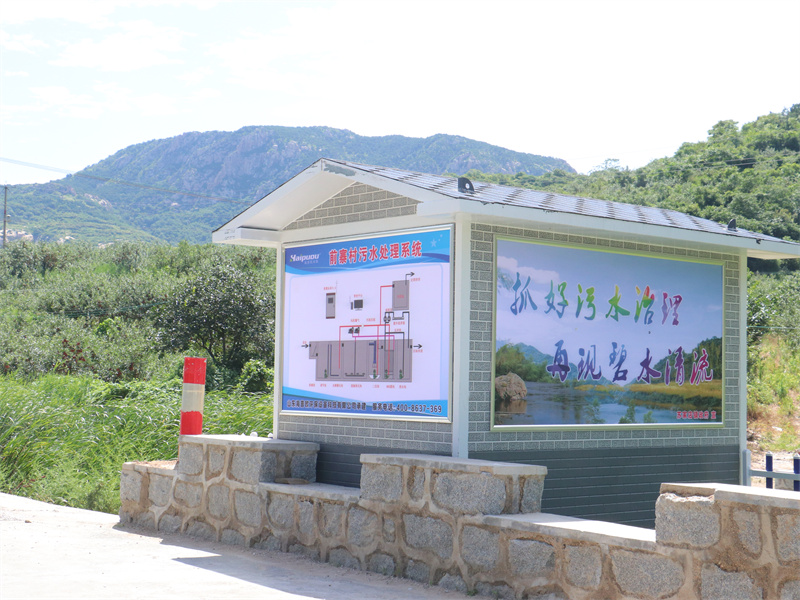
This is currently the most widely used type, adopting a modular design that integrates pre-treatment, biological treatment, advanced treatment, disinfection, and other processes into a single piece of equipment. With a compact structure and easy installation, it can be buried underground or placed on the ground, saving site space. It is suitable for scenarios with sewage discharge volumes ranging from 5 to 500 m³/d, such as centralized rural residential areas, small urban communities, hotels, homestays, and dormitories attached to industrial parks. The core process is mainly biological treatment (e.g., Anoxic/Oxic (A/O), Anaerobic-Anoxic-Oxic (A²/O), Membrane Bioreactor (MBR)), with a COD removal rate of over 85% and stable nitrogen and phosphorus removal efficiency. The effluent can be directly discharged or used for landscaping irrigation .
2. MBR (Membrane Bioreactor)
Integrating biological treatment technology and membrane separation technology, it uses membrane modules to replace traditional sedimentation tanks, achieving efficient solid-liquid separation. The equipment produces high-quality effluent (with suspended solids and turbidity close to tap water standards) that can be directly reused, and its footprint is only 1/3 to 1/2 of that of traditional processes. It is suitable for scenarios requiring high effluent quality, such as hospitals, high-end residential communities, sewage reuse projects in water-scarce areas, and urban core areas with strict site space restrictions .
3. Buried Domestic Sewage Treatment Equipment
Adopting a fully buried installation method, the main body of the equipment is buried underground, allowing the ground to be planned for greenery, parking lots, etc., without affecting surface space utilization. Its core process is mostly biological contact oxidation, featuring strong shock load resistance, stable operation, low noise, no odor, and minimal impact on the surrounding environment. It is suitable for scenarios with high landscape requirements such as urban suburbs, rural areas, and scenic spots, with a flexible treatment capacity ranging from 10 to 1000 m³/d.
4. Small Decentralized Domestic Sewage Treaters
These are small-scale devices designed for single or multiple rural households (3-10 households), characterized by compact size, simple installation, and no need for full-time attendance. They adopt processes such as constructed wetlands, biological filters, or small biological reactors. Suitable for decentralized drainage in individual rural households and sewage governance in remote mountainous areas, they effectively solve the problem of "sewage overflow" in rural areas and contribute to living environment improvement in rural revitalization efforts .
III. Core Technical Principles of Domestic Sewage Treatment Equipment
The treatment efficiency of domestic sewage treatment equipment primarily relies on combined processes, with the mainstream technical route being "pre-treatment + biological treatment + advanced treatment + disinfection". The functions of each link are as follows:
1. Pre-treatment Stage
Preliminary purification is achieved through grilles, grit chambers, and equalization tanks. Grilles intercept large suspended solids in sewage (such as plastic bags, vegetable leaves, and hair) to prevent equipment blockage; grit chambers remove inorganic particles like sand and gravel; equalization tanks balance the water volume and quality of sewage, avoiding the impact of water quality fluctuations on subsequent processes.
2. Biological Treatment Stage
This is the core link for pollutant removal, utilizing the metabolic activities of microorganisms to decompose pollutants such as organic matter, nitrogen, and phosphorus in sewage. Aerobic biological treatment (e.g., biological contact oxidation, activated sludge process) efficiently decomposes organic matter; anaerobic/anoxic biological treatment (e.g., A/O process) achieves nitrogen removal through nitrification-denitrification, while the A²/O process can simultaneously remove nitrogen and phosphorus to meet higher discharge standards .
3. Advanced Treatment and Disinfection Stage
Advanced treatment removes residual suspended solids and trace organic matter through filtration (e.g., quartz sand filtration, activated carbon filtration); the disinfection link uses ultraviolet light, chlorine dioxide, or sodium hypochlorite to kill pathogenic microorganisms such as bacteria and viruses in sewage, ensuring the effluent meets safety standards.
IV. Key Points for Selection of Domestic Sewage Treatment Equipment
Inappropriate selection can lead to substandard treatment efficiency, excessive operating costs, or frequent equipment failures. The following 5 points require focused attention:
1. Clarify Water Quality and Treatment Standards
First, test indicators of domestic sewage such as COD, BOD5, suspended solids, nitrogen, and phosphorus. Combined with local environmental protection requirements, determine the effluent standards to be met (e.g., Class 1 A, Class 1 B, or reuse standards), and match the process intensity of the equipment accordingly.
2. Match Treatment Capacity
Select equipment models based on the daily average sewage discharge volume (m³/d), avoiding situations where "large equipment handles small loads" or "small equipment bears excessive loads". It is recommended to reserve a 10%-20% treatment margin to cope with water volume fluctuations during peak water usage periods.
3. Adapt to Site Conditions
For narrow site spaces, integrated, MBR, or buried equipment can be selected; if the ground needs to be planned for other uses, buried equipment is preferred; small decentralized treaters are suitable for scattered rural scenarios. Meanwhile, factors such as transportation channels for equipment installation, power access, and drainage conditions should be considered.
4. Calculate Operation and Maintenance Costs
Pay attention to equipment energy consumption (electricity fees), chemical consumption (e.g., disinfectants), sludge disposal costs, and maintenance frequency. Priority should be given to equipment with low energy consumption, easy maintenance, and low sludge production, as they are more economical for long-term operation.
5. Inspect Equipment Quality and Manufacturer Capability
Choose manufacturers with environmental engineering design qualifications and equipment production licenses. Check the quality certification of equipment materials (e.g., anti-corrosion carbon steel, stainless steel) and core components (e.g., pumps, blowers, membrane modules). Meanwhile, pay attention to the manufacturer's installation and commissioning capabilities and after-sales operation and maintenance services.
V. Installation and Daily Maintenance of Domestic Sewage Treatment Equipment
Scientific installation and standardized maintenance are the guarantees for the long-term stable operation of equipment. The core points are as follows:
1. Installation Notes
Equipment installation must be constructed in strict accordance with the foundation drawings provided by the manufacturer to ensure the foundation is level and meets load-bearing requirements; buried equipment must undergo anti-corrosion and anti-seepage treatment to prevent groundwater infiltration or equipment corrosion; pipeline connections must be tightly sealed to prevent leakage; electrical equipment installation must comply with safety specifications and have reliable grounding. After installation, water-filled tests and trial operations are required to verify whether equipment operating parameters meet standards.
2. Daily Maintenance Points
- Regularly clean debris from grilles and grit chambers to avoid pipeline and water pump blockage;
- Monitor parameters such as dissolved oxygen, pH value, and sludge concentration in biological treatment tanks, and adjust aeration intensity and reflux ratio in a timely manner;
- Regularly clean or replace filter materials and membrane modules (for MBR equipment) to ensure treatment efficiency;
- Inspect the operating status of power equipment such as pumps and blowers, regularly add lubricating oil, and repair faulty components promptly;
- Replenish chemicals for disinfection equipment and maintain it properly to ensure disinfection effectiveness;
- Establish operation and maintenance records, documenting equipment operating parameters, maintenance records, and water quality test results for easy traceability and optimization.
VI. Industry Development Trends of Domestic Sewage Treatment Equipment
With the upgrading of environmental protection policies, technological innovation, and the advancement of the "dual carbon" goal, the domestic sewage treatment equipment industry presents three major development trends:
1. Intelligent Upgrading
Future equipment will integrate sensors, the Internet of Things, and big data technologies to realize real-time monitoring of water quality and volume, automatic adjustment of operating parameters, and fault early warning. This will reduce manual operation and maintenance costs while improving treatment efficiency and stability.
2. Energy Conservation and Resource Recovery
Equipment will place greater emphasis on energy consumption optimization, adopting energy-efficient blowers, water pumps, and high-efficiency biological processes to reduce operating energy consumption. Meanwhile, resource recovery from sewage will be strengthened, such as biogas production through anaerobic digestion and nitrogen-phosphorus recovery for fertilizer production, achieving a "win-win" of sewage treatment and resource utilization.
3. Coordination of Decentralized and Centralized Systems
Targeting the characteristics of urban-rural sewage governance, decentralized equipment will become more miniaturized and low-cost to adapt to scattered rural scenarios; centralized equipment will develop towards large-scale and high-efficiency, covering urban core areas in combination with pipeline networks. This will form a coordinated governance pattern of "decentralized treatment + centralized treatment" .
Conclusion
Domestic sewage treatment equipment is the core infrastructure for sewage governance, and its selection, application, and maintenance are directly related to the achievement of environmental protection goals and the effectiveness of resource recycling. Whether in urban construction, rural improvement, or the operation of various premises, selecting suitable domestic sewage treatment equipment and conducting standardized operation and maintenance can not only meet environmental compliance requirements but also reduce long-term operating costs, achieving the unity of ecological and economic benefits. In the future, with continuous technological progress, domestic sewage treatment equipment will become more intelligent, efficient, and energy-saving, providing stronger support for the sustainable utilization of water resources and the construction of ecological civilization.
Related news


Contact: +86 18016210178 (Ms.Liu)
Add:No.56, Donghuan Road, Zhucheng City, Weifang City, Shandong Province