

News details
How to Choose a Cost-Effective Solution for Industrial Sewage Treatment Equipment Pricing
Release time:
2025-12-10 14:38
Industrial Sewage Treatment Equipment: Importance, Pricing Factors, Types, and Selection Guide
With the acceleration of industrialization, the discharge of industrial sewage continues to increase, posing a serious threat to the environment. As a key means of sewage treatment, industrial sewage treatment equipment can effectively remove organic substances, heavy metals, suspended solids and other pollutants from sewage, enabling it to meet national discharge standards and protect water resources and the ecological environment. Currently, the market demand for industrial sewage treatment equipment is growing steadily, especially in industries such as chemical engineering, pharmaceuticals, food processing, and textiles.
II. Factors Affecting the Price of Industrial Sewage Treatment Equipment
Different treatment processes are suitable for different types of sewage, with significant differences in costs. Common treatment processes include physical treatment, chemical treatment, and biological treatment. Physical treatment equipment is simple and low-cost but has limited treatment effects. Chemical treatment can quickly remove pollutants but has high chemical costs and may cause secondary pollution. Biological treatment offers good treatment results and low operating costs but requires large equipment investment and occupies a large area.
(II) Treatment Capacity
Treatment capacity is one of the important factors affecting equipment prices. Larger treatment volumes require equipment with larger dimensions and higher power, leading to increased costs. Generally, small-scale industrial sewage treatment equipment is relatively affordable and suitable for enterprises with small discharge volumes. Large-scale equipment has higher prices and is designed for large-scale production enterprises.
(III) Equipment Material
Equipment material directly impacts service life and corrosion resistance. Common materials include carbon steel, stainless steel, and glass fiber reinforced plastic (FRP). Carbon steel equipment is low-priced but has poor corrosion resistance, suitable for treating sewage with good water quality. Stainless steel equipment offers strong corrosion resistance and long service life but comes with a higher price tag. FRP equipment features light weight, high strength, and good corrosion resistance, with a price between carbon steel and stainless steel.
(IV) Degree of Automation
Higher automation levels make equipment operation and management more convenient but also increase costs. Automated equipment is usually equipped with advanced control systems, enabling remote monitoring and automatic adjustment to improve treatment efficiency and stability. For enterprises with high process requirements and high labor costs, highly automated equipment can reduce long-term operating expenses.
(V) Other Factors
In addition to the above, factors such as brand reputation, manufacturer strength, and after-sales service also influence prices. Equipment from well-known brands typically offers reliable quality and comprehensive after-sales support but may be more expensive. The manufacturer's production scale and technical capabilities also affect equipment costs and pricing.
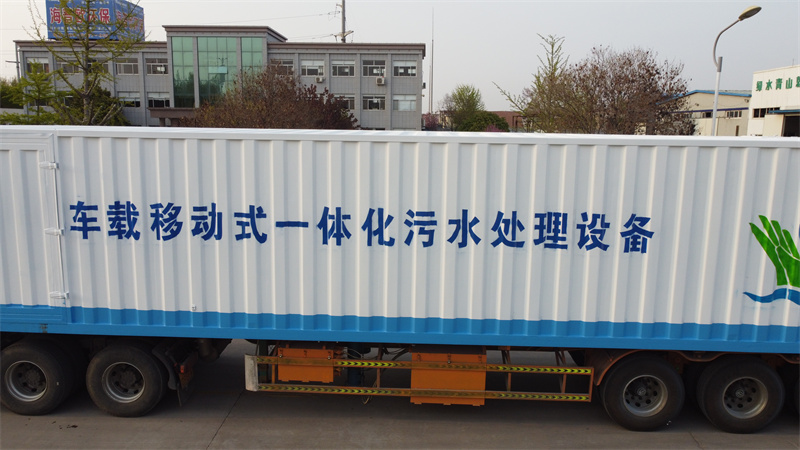
III. Common Types and Price Ranges of Industrial Sewage Treatment Equipment
V. Conclusion
The price of industrial sewage treatment equipment is affected by multiple factors. Enterprises should select cost-effective solutions based on their specific needs, considering treatment process, capacity, material, and automation level. They should also focus on equipment quality and after-sales service. With increasingly strict environmental requirements, the market prospect for industrial sewage treatment equipment will be broader. Enterprises should attach importance to sewage treatment, select appropriate equipment to achieve compliant discharge, and contribute to environmental protection.
Related news


Contact: +86 18016210178 (Ms.Liu)
Add:No.56, Donghuan Road, Zhucheng City, Weifang City, Shandong Province