

News details
Comprehensive Analysis of Sewage Treatment Equipment: Types, Principles and Application Scenarios
Release time:
2025-12-09 13:28
Against the backdrop of increasingly severe global water scarcity and environmental pollution, sewage treatment has become a crucial link in safeguarding the ecological environment. As the core carrier of sewage purification, sewage treatment equipment directly determines the treatment effect and environmental benefits through its performance and selection. This article will systematically sort out the mainstream sewage treatment equipment on the market, covering everything from technical principles to practical applications, providing comprehensive references for industry practitioners and environmental protection enthusiasts.
I. Pretreatment Equipment: The "First Line of Defense" in Sewage Purification
The core task of the pretreatment stage is to remove large impurities, suspended solids, and some harmful substances from sewage, thereby reducing the load for subsequent advanced treatment.
- Gratings
Gratings serve as the "gatekeepers" of sewage treatment, mainly used to intercept solid particles larger than 5mm in sewage, such as branches, plastic bags, and gravel. They can be classified into coarse gratings (50-100mm), medium gratings (10-40mm), and fine gratings (1-10mm) based on the spacing of the grating bars. In terms of operation mode, they are divided into manual gratings and mechanical gratings. Among them, mechanical gratings automatically remove dirt through chain transmission, making them suitable for large-flow sewage plants, such as the pretreatment section of urban domestic sewage treatment plants.
- Grit Chambers
Grit chambers utilize the principle of gravity sedimentation to remove inorganic particles with high density from sewage, such as sand and gravel. Common types include horizontal-flow grit chambers (simple structure, large treatment capacity), vertical-flow grit chambers (small floor area), and aerated grit chambers (achieving sand-water separation through aeration and agitation while removing some organic matter). After an aerated grit chamber was adopted in a sewage treatment plant of a chemical industrial park, the sand removal rate increased to 95%, effectively avoiding wear and blockage of subsequent equipment.
- Equalization Tanks
Equalization tanks are used to balance the water quality and quantity of sewage, alleviating the impact load on subsequent treatment units. Their volume should be designed according to the fluctuation of sewage discharge, and they are usually equipped with agitation devices (such as mechanical agitation and air agitation) to prevent sludge sedimentation. For high-concentration organic wastewater, equalization tanks can also conduct pre-acidification treatment to improve the efficiency of subsequent biodegradation.
II. Primary Treatment Equipment: Core Units of Physical Purification
Primary treatment mainly relies on physical separation to remove suspended pollutants from sewage and reduce the concentrations of COD (Chemical Oxygen Demand) and BOD (Biochemical Oxygen Demand).
- Sedimentation Tanks
Sedimentation tanks are key equipment for primary treatment, where suspended particles settle to the bottom of the tank under the action of gravity. According to the direction of water flow, they can be divided into horizontal-flow sedimentation tanks (suitable for large-flow sewage, such as urban sewage plants), vertical-flow sedimentation tanks (small floor area, suitable for small sewage stations), and radial-flow sedimentation tanks (high sedimentation efficiency, often used in high-concentration sewage treatment). A food processing plant used a horizontal-flow sedimentation tank to treat wastewater, achieving an 80% suspended solid removal rate and creating favorable conditions for subsequent biological treatment.
- Dissolved Air Flotation (DAF) Machines
DAF machines inject air into sewage to generate micro-bubbles that adsorb suspended particles, making them float to the water surface with the bubbles to form scum, thereby realizing solid-liquid separation. This equipment is particularly suitable for treating oily sewage (such as oilfield wastewater and catering wastewater) and low-temperature, low-turbidity sewage. Pressurized dissolved air flotation machines are the most widely used type currently. They dissolve air in water under high pressure and then release it under reduced pressure to generate dense bubbles, achieving an emulsified oil removal rate of over 90%.
III. Secondary Treatment Equipment: The "Main Force" of Biodegradation
Secondary treatment is the core link of sewage treatment. It uses the metabolic action of microorganisms to decompose organic matter and remove nutrients such as nitrogen and phosphorus, enabling sewage to meet discharge standards.
- Activated Sludge Process Equipment
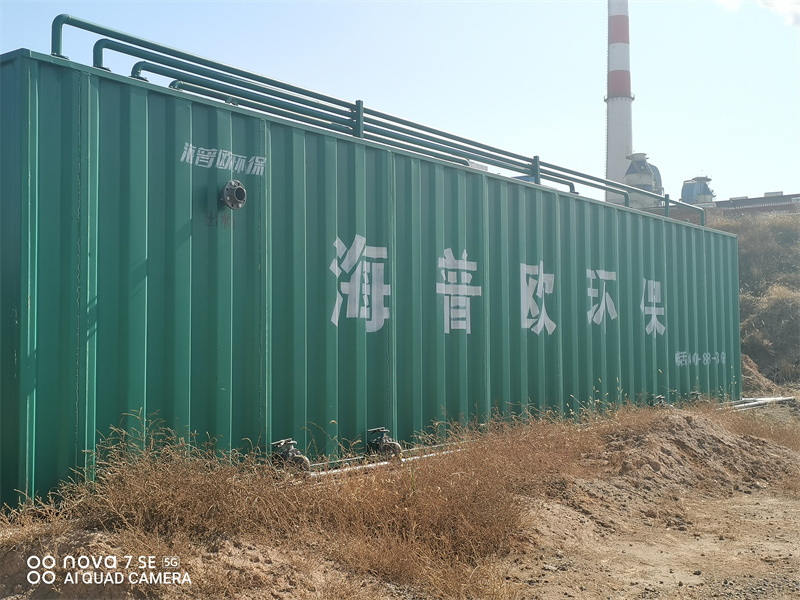
The activated sludge process is the most widely used biological treatment technology at present, with its core equipment being aeration tanks and secondary sedimentation tanks. In the aeration tank, microorganisms feed on organic matter in sewage under aerobic conditions and convert pollutants into carbon dioxide and water through metabolic processes. Based on different aeration methods, it can be divided into plug-flow aeration tanks (such as ordinary aeration tanks), completely mixed aeration tanks (such as oxidation ditches), and Sequencing Batch Reactors (SBR). The SBR process realizes sewage treatment through periodic water inflow, aeration, sedimentation, and drainage, and has the advantages of small floor area and strong shock load resistance, making it suitable for small and medium-sized sewage plants.
- Biofilm Process Equipment
The biofilm process forms a biofilm by attaching microorganisms to the surface of a carrier, and purifies sewage using the metabolic action of microorganisms on the film. Common equipment includes biofilters, rotating biological contactors (RBCs), and Membrane Bioreactors (MBR). Biofilters use gravel, plastic, etc., as filter media; when sewage flows through the surface of the filter media and comes into contact with the biofilm, organic matter is degraded. MBR combines biological treatment with membrane separation technology, realizing sludge-water separation through ultrafiltration membranes or microfiltration membranes. The effluent quality can meet reuse standards, and it is widely used in reclaimed water reuse projects. A residential community adopted the MBR process to treat domestic sewage, and the effluent was used for green irrigation, saving 12,000 tons of water annually.
- Anaerobic Treatment Equipment
Anaerobic treatment equipment is suitable for high-concentration organic wastewater (such as beer wastewater and breeding wastewater). Under anaerobic conditions, anaerobic bacteria decompose organic matter into methane and carbon dioxide, realizing pollutant removal and energy recovery. Common types include Upflow Anaerobic Sludge Blanket (UASB) reactors, Internal Circulation (IC) anaerobic reactors, and anaerobic filters. The UASB reactor achieves solid-liquid separation through the sedimentation performance of granular sludge, with a COD removal rate of over 80%, and the biogas produced can be used as clean energy.
IV. Tertiary Treatment Equipment: The "Final Checkpoint" of Advanced Purification
Tertiary treatment aims to remove trace pollutants remaining after secondary treatment, such as phosphorus, nitrogen, heavy metals, and refractory organic matter, enabling sewage to meet higher discharge standards or reuse requirements.
- Filtration Equipment
Filtration equipment is used to remove fine suspended solids and colloidal substances from sewage. Common types include sand filters, activated carbon filters, and ultrafiltration membranes. Sand filters use quartz sand as filter media to remove impurities through interception; activated carbon filters use the adsorption performance of activated carbon to remove organic matter, odors, and some heavy metals; ultrafiltration membranes remove microorganisms such as bacteria and viruses through the screening effect of membrane pores, and the effluent can be directly used as industrial circulating water.
- Disinfection Equipment
Disinfection is the final process of sewage treatment, aiming to kill pathogenic microorganisms in sewage and prevent water-borne diseases. Commonly used disinfection equipment includes ultraviolet (UV) disinfectors, chlorine dioxide generators, and ozone generators. UV disinfection has the advantages of high efficiency and no residue, but it is greatly affected by water transparency; chlorine dioxide disinfection has stable effects and is suitable for various water qualities; ozone disinfection has strong oxidation capacity and can remove both organic matter and odors, but the equipment cost is relatively high.
- Nitrogen and Phosphorus Removal Equipment
For sewage with high nitrogen and phosphorus content (such as fertilizer plant wastewater and domestic sewage), special nitrogen and phosphorus removal equipment is required. Nitrogen removal usually adopts the nitrification-denitrification process: nitrifying bacteria convert ammonia nitrogen into nitrate, and then denitrifying bacteria reduce nitrate to nitrogen gas. Phosphorus removal can be achieved through chemical phosphorus removal (adding chemicals such as PAC and PAM to form phosphorus precipitates) or biological phosphorus removal (utilizing the phosphorus-accumulating characteristics of polyphosphate-accumulating organisms). A sewage treatment plant adopted the A²/O process (Anaerobic-Anoxic-Oxic), achieving nitrogen and phosphorus removal rates of 85% and 90% respectively, with effluent quality superior to the Grade 1A standard of GB 18918-2002.
V. Guide for the Selection of Sewage Treatment Equipment
The selection of appropriate sewage treatment equipment requires comprehensive consideration of the following factors:
- Sewage Quality and Quantity: Different types of sewage (such as domestic sewage and industrial sewage) have significant differences in pollutant composition. Targeted equipment should be selected based on water quality analysis results; the volume of sewage determines the treatment capacity of the equipment, avoiding "overcapacity" or "insufficient capacity".
- Treatment Standards: The effluent standard should be determined according to local environmental protection requirements. For example, urban sewage plants need to meet the Grade 1A standard, while reclaimed water needs to meet higher water quality requirements.
- Floor Area and Investment Cost: On the premise of ensuring treatment effects, priority should be given to equipment with a small floor area and low investment cost, especially for projects with limited space.
- Operating Cost and Maintenance Difficulty: The operating cost (such as energy consumption and chemical consumption) and maintenance difficulty of equipment directly affect long-term operational benefits. Equipment with low energy consumption and simple maintenance should be selected.
VI. Conclusion
The development and innovation of sewage treatment equipment are important driving forces for the progress of the environmental protection industry. From traditional physical and chemical treatment to advanced biofilm technology and membrane separation technology, sewage treatment equipment is moving towards higher efficiency, intelligence, and energy conservation. In the future, with the continuous tightening of environmental protection policies and continuous technological breakthroughs, sewage treatment equipment will play a more important role in water resource recycling and ecological environment protection.
Related news


Contact: +86 18016210178 (Ms.Liu)
Add:No.56, Donghuan Road, Zhucheng City, Weifang City, Shandong Province